
I have layered my thoughts on a beautifully written piece around the solace we find in our phones, and a reflection on how contextual penetration through specific cohorts can drive a richer evolution of AI in the long run. Read on!
It Ain’t The Phone Buzzing
Last week, my niece was playing Magic Tiles on her phone, and I was left trying to figure the names of the songs featured in the game. Needless to say, she had a far better result in her game than me on guessing the tunes and artists. It also made me think about the level of concentration she was able to exert on a five-inch screen—free of any distraction, alongside a well-tuned hand-eye coordination.
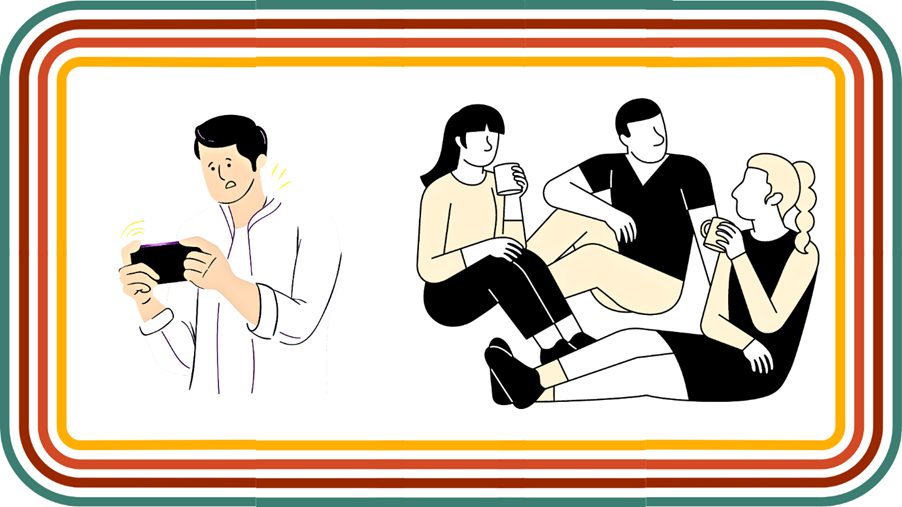
Once the screen zooms out, I’ve seen a lot of children struggle to focus, pause to think, think first to respond, and hold a simple conversation. It’s as if the phone screen is an unprescribed drug for isolation.
I’ve been keeping a watch on my phone usage, and how frequently I reach out to my phone, while being engaged in something completely unrelated. It’s not a healthy picture, and I’m guilty as charged. I’ve had instances where I’ve picked up my phone in between a movie or a TV show, during a two-minute window between finishing dinner and grabbing a glass of water, first thing in the morning, even before opening my eyes, etc. And the interesting part is, at least a good 90% of these instances are without any triggers or notifications on the part of the phone. They are just the dark play of a subconscious mind.
I stumbled upon this beautifully written piece by Adam Aleksic, where he draws a correlation of a phone to a house. He delves into the familiarity of oneself with one’s phone, which would possibly have the shortest learning curve. “Only I have the motor memory to immediately open the notes app on my phone. A stranger would have to look for it, but my fingers subconsciously understand where to go. Much like with my childhood home, I have an embodied knowledge of my home screen.”
In his piece, I like the way Adam paints the picture of a computer, and captures how it’s different from a phone. Words like ‘taskbar’, ‘desktop’, ‘thrash’, ‘files’ harp upon the formal and workplace-like positioning of a computer. Despite phones having some of these functional icons, they feel more homely and personal. They are intrusive, but they don’t feel that way, and we as humans wouldn’t agree either. Adam looks at apps as rooms, and different apps drive home varying levels of emotional commitment—dopamine hits, seeking companionship, and therapeutic indulgences. The next time someone asks you, ‘Where do you stay?’, and if your answer is, ‘In my phone!’, you won’t be wrong.
Scaling And Nurturing With Communities
‘Cult’, ‘clan’, and ‘club’ originated in the hallways of religious, family and social interactions centuries ago. The phenomenon of assimilating people at one place, or towards one cause is centuries old, but the modern-day facelift of ‘club’ is not just fuelling present consumerism, but if nurtured well, it can set the stage for future innovations. We see this trend of building clubs of commons with developer meetups, gathering of like-minded readers, toastmaster chapters, alumni groups, leadership cohorts, and many more.
AI is the magnet, and Anthropic has set the parameter in over 60 Universities, with over 15,000 students signing up to be part of Claude Builders Club. Such programs have existed in the past such as Microsoft Student Ambassadors, Apple’s Swift Coding Clubs, etc., but the AI-centred clubs are beyond coding language and deep-tech geek outs.
In order to embed real-life context into algorithms, these clubs would need to be multidisciplinary with depth research expertise. Think of a club consisting of thinkers and practitioners of economics, who can wrestle with different theories to strengthen the AI models. These clubs are not just current users for Anthropic, but strong, relevant, and expert data shapers for the future of Claude and its successors. Maybe they’ll get individuals out of the comfort of their phone’s home screens, maybe they’ll push them deeper into it.
I spoke of customer Lifetime Value (LTV) in this piece, and I feel, the AI clubs will bend the curve, wherein both brands and users will feed off each other’s expertise over time, thereby enriching long-term returns and value creation.
Listen Up
The Chain from Fleetwood Mac’s February 1977 album, Rumors. The haunting guitars at the start picking on the beat, waiting for the vocals whose first couple of lines spin up a Crosby Stills Nash & Young-like harmony. The bass and the breakaway guitar solo towards the end race for a stirring finish.
I’m forever on the lookout for tunes old and new, You can check out my expanding Trove Of Tunes that I’m curating in a Spotify playlist.
Cheers,
Shri